Fitting a turn-key lock to an internal door: what you actually need
Someone in the Experience Tetbury group posted a picture of an internal door and asked if anyone could fit a turn-key lock to it. Fair question. Happens a lot, actually, especially with shared houses, home offices, or rooms you want to lock when the grandkids come to stay.
The short answer is yes, any decent handyman can do this. The longer answer is that picking the wrong lock is one of the easiest ways to make a good door look scruffy and, worse, not actually lock properly. So before you order anything from Amazon, worth a quick read.
Mortice lock or tubular lock. Two different animals.
When people say "turn-key lock" they usually mean one of two things.
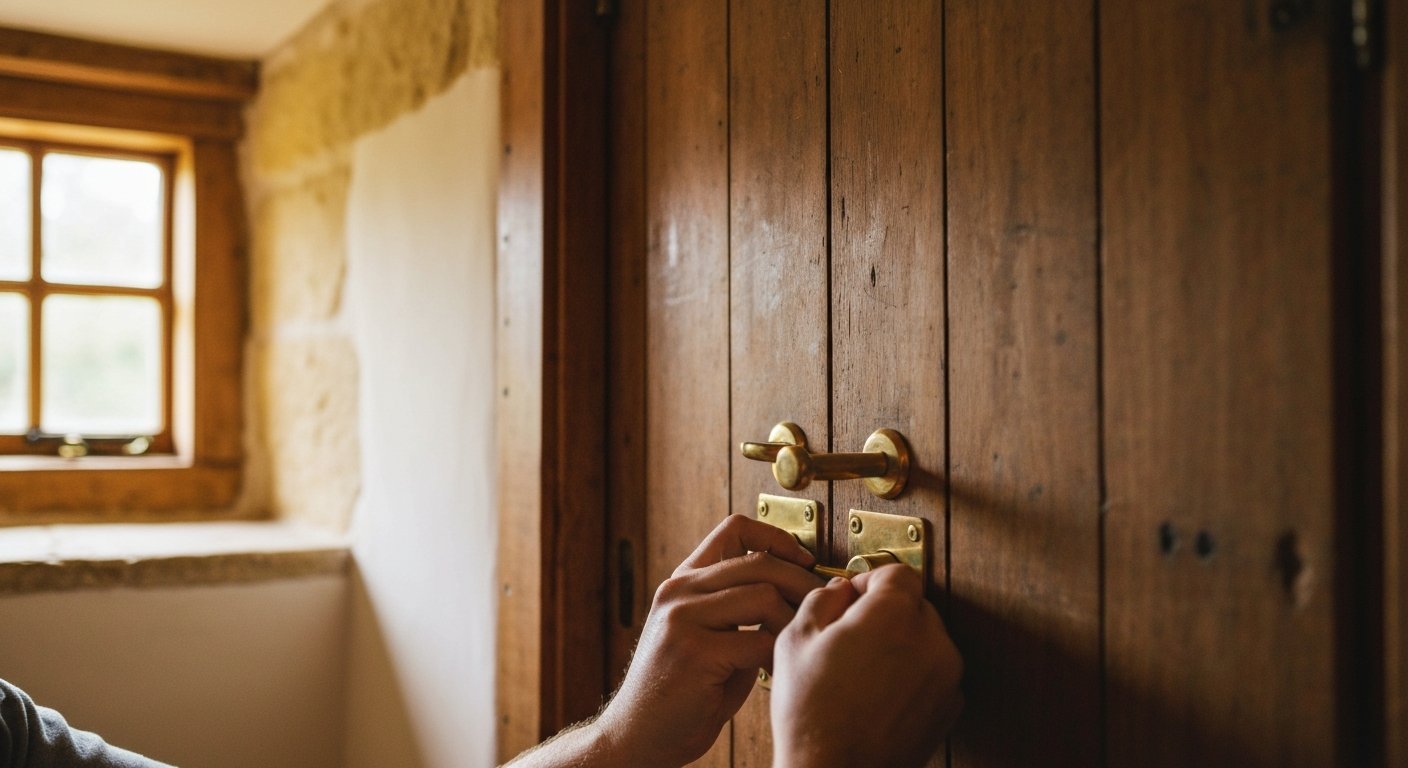
A mortice lock sits inside a pocket cut into the edge of the door. It's a proper, chunky piece of kit. Key turns a bolt, bolt slides into a keep in the frame. Job done. These are what you'd use on a study you want to actually secure. On a bathroom, fit a thumb-turn lock that can be opened from outside in an emergency. They need a decent-sized pocket cut into the door, which means a router or a sharp chisel and a bit of patience.
A tubular lock, or "night latch" for the outside of a door, is the lighter option. You drill a hole through the face of the door and a smaller one through the edge. Quicker to fit. Less secure. Fine for a bedroom or an office but not what you'd want on anything valuable.
Nine times out of ten on an internal door, a mortice lock is what you want. Looks right. Feels right. Lasts.
Measure the door first. Please.
Thickness matters. Modern internal doors are often 35mm thick. Period doors in Cotswold cottages, which is most of what I see round here, are sometimes 40mm or even 45mm. Check two numbers on the packaging. The lock body must be thin enough to leave solid timber either side, and the case depth must fit within the width of the door's edge frame.
Measure twice. Cut once. Sounds obvious. I've still managed to get it wrong at my own house, in a cupboard I was in a hurry to finish. Doesn't happen on client jobs.
What you'll need in your toolkit
- A sharp wood chisel, 19mm or thereabouts
- A drill with a 22mm flat bit or a router if you've got one
- A try square and a pencil
- The lock itself, with its striker plate
- A bradawl or small pilot drill for the screws
If you've never cut a mortice pocket before, don't start on the front door. Start on a shed door. Or call someone who's done a few hundred.
The bit most people miss
The striker plate on the frame needs a pocket cut behind it, not just on the face. Otherwise the bolt doesn't have anywhere to go and the door won't close properly. I've seen more than one lock fitted where the bolt just scrapes against the plate and the key won't turn fully. Looks like the lock's broken. Isn't. Just wasn't finished.
How long it should take
On a door that's already hung and closing nicely, a first-time fit of a mortice turn-key lock is about 45 minutes to an hour if you know what you're doing. Add another 15 minutes if the frame needs a bit of persuading. If your door has dropped or the latch is already wonky, factor in a bit more. Old houses have personality. That's a polite way of saying nothing is quite straight.
Need a lock sorted?
If you'd rather not tackle it yourself, I'll pop over, pick the right lock for your door, and fit it properly. Usually done inside an hour.
Doors, locks and windows