Why your stone window sills look damp, and what actually fixes it
This one comes round every April like the daffodils. The phone starts with variations of the same thing. "Martin, the window sills are sweating again. The paint's bubbling. What's going on?" Nine times out of ten it's not damp in the traditional sense. It's condensation. And the fix is usually sensible rather than expensive.
Why stone sills get the worst of it
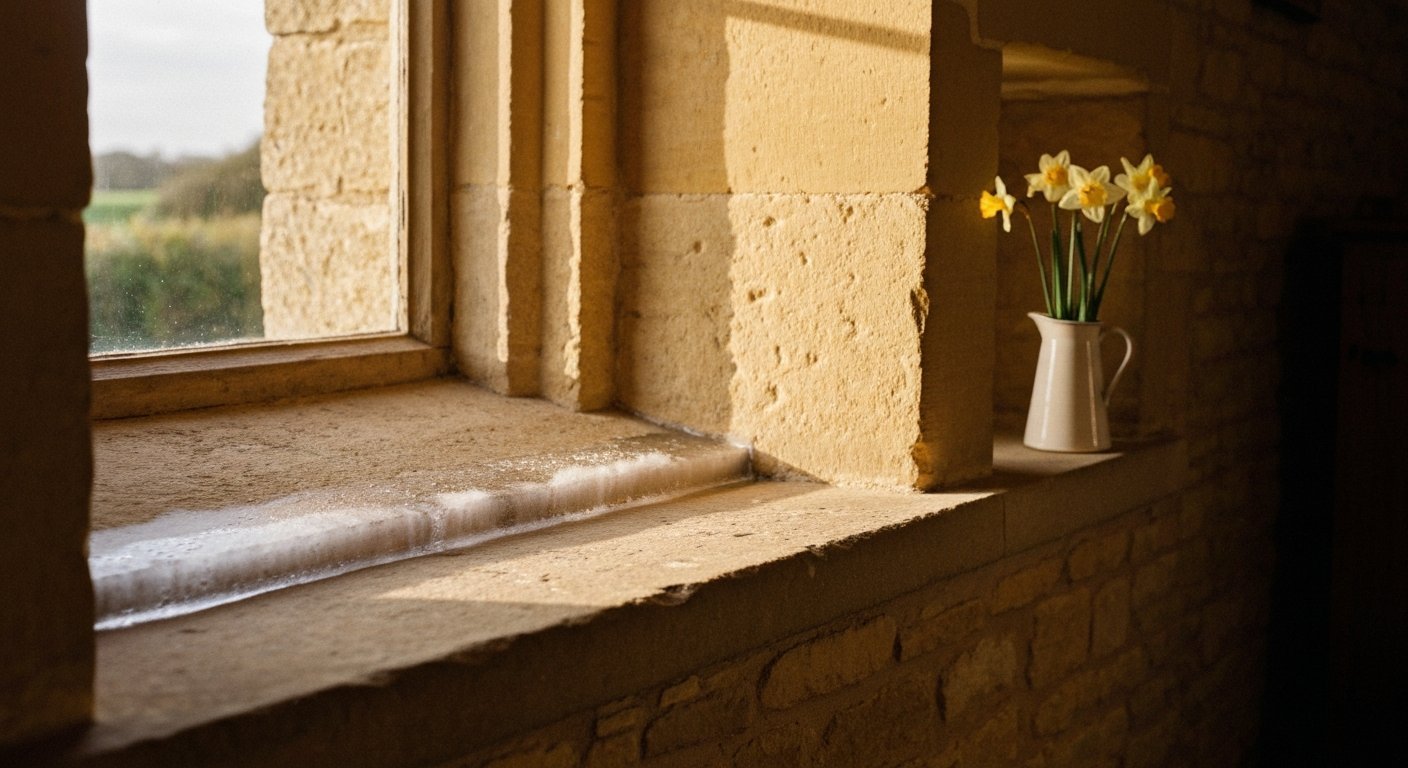
Cotswold stone, bless it, is beautiful. Warm in the evening light. Handsome in the frost. Utterly useless at keeping in heat. Stone is a cold surface. Warm, moist air from inside your house hits that cold surface and the water vapour turns back into water. Same reason a cold pint sweats on a summer day. The sills are just the coldest bit of the window reveal, so they take the hit first.
You'll see it worst in north-facing rooms, kitchens and bedrooms. A night's sleep behind closed curtains puts a surprising amount of moisture into the air.
The three checks before anything else
Before spending a penny, run through these. Most condensation problems in Cirencester cottages disappear once one or more of these gets sorted.
1. Ventilation
Trickle vents on the top of modern windows are there for a reason. If yours are closed or painted over, open them. Cracking a window for 10 minutes after a shower or a roast chicken dinner does more than any dehumidifier. Old houses were built leaky on purpose. Modern weatherproofing has made them airtight, which is great for heat loss and terrible for moisture.
2. The heating pattern
A house that's heated to 21 degrees in the evening and then plunges to 12 overnight is condensation weather. Temperature swings hammer the cold surfaces. Running the heating a little lower but more steadily, at about 18 degrees round the clock in the coldest months, can make a real difference. Costs less than people expect too, because you're not having to heat the furniture from cold every morning.
3. Where the moisture's coming from
Drying laundry on radiators is a classic. One load of washing on a radiator puts roughly two litres of water into the air in your house. Two litres. Every load. If you can get it outside or on a dehumidifier, the sills will thank you.
When it's actually damp
If the sill's wet on the outside too, or there's a tide mark that creeps upwards rather than down, or the plaster behind is staining, you might have something more serious. Penetrating damp through old lime mortar, pointing that's gone past its best, or a lead flashing that's given up. These aren't handyman jobs. These are "get a proper damp surveyor out" jobs, and ideally one who specialises in period stone, not one trying to sell you a chemical damp course for a cottage that never had one.
The short test: a cold sill that dries off by lunchtime is condensation. A sill that stays damp all day, all week, is something else.
Cheap and sensible things to try
- Open the trickle vents. Free.
- Wipe the sills every morning for a week in April. Gets the paint-damaging water off before it can do harm, and tells you how bad the problem actually is.
- Run a small dehumidifier in the worst room. £120 ish. Pays for itself in paint and plaster over a few winters.
- Add a thermal blind. Slows the cold getting into the room.
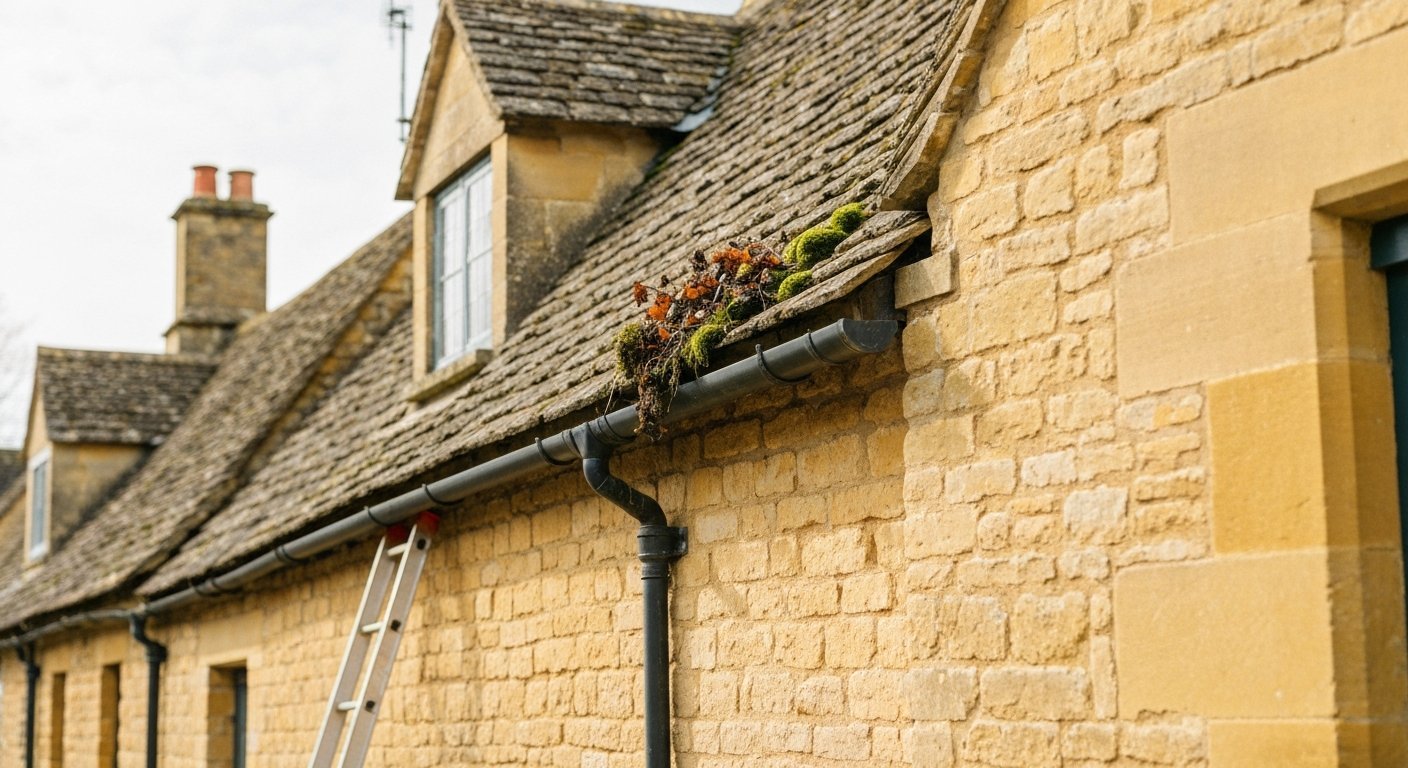
- Check the pointing outside the window. If it's blown or missing, rain is getting into the wall and the sill is the first surface that shows it.
The paint question
Once condensation has lifted the paint on a stone sill, you'll need to strip it back, let it dry out thoroughly, and repaint with a breathable paint. Not standard gloss. Breathable masonry paint or a specialist trim paint designed for moisture-prone areas. Standard gloss traps the water behind it and you're back to square one in six months. Old paint on an older house may contain lead, so test it first and strip it wet, never by dry sanding. That's a job I'll happily do but the drying-out bit can take a fortnight in spring, longer if it's a wet spring.
Sills sweating? I can take a look.
It's usually a half-hour visit, charged as the first hour: £55, with travel included within five miles. I'll tell you straight whether it's a simple fix or a job for a damp specialist.
Home maintenance