Why doors stick in summer, and what to do about it
June calls are different from January calls. In January it's cold, it's wet, the back door won't shut because the weather seal's compressed. In June it's the opposite. Wood's swollen, the door won't shut because the timber's grown into the frame by a millimetre and a half.
Why it happens
Wood absorbs moisture from humid air. A door in a period Cotswold cottage can change dimension by 2 to 3mm across its width between February and July. That's enough to turn a 3mm gap at the latch side into a "won't close" situation.
It's worst on painted doors (paint traps moisture), south-facing rooms (temperature swings drive more movement), and doors that had minimal gap to begin with (new fittings are often tight on day one).
First, identify where it's sticking
Close the door slowly with your eye at the gap. Watch where the timber touches the frame. Sometimes it's:
- Top edge, near the hinge side (most common)
- Latch side, middle to top
- Bottom edge, scraping the floor
- Corner diagonally opposite the hinge (classic sign the frame itself is out of square)
Don't reach for the plane yet. Work out what's actually happening first.
The fixes, gentlest first
Tighten the hinges
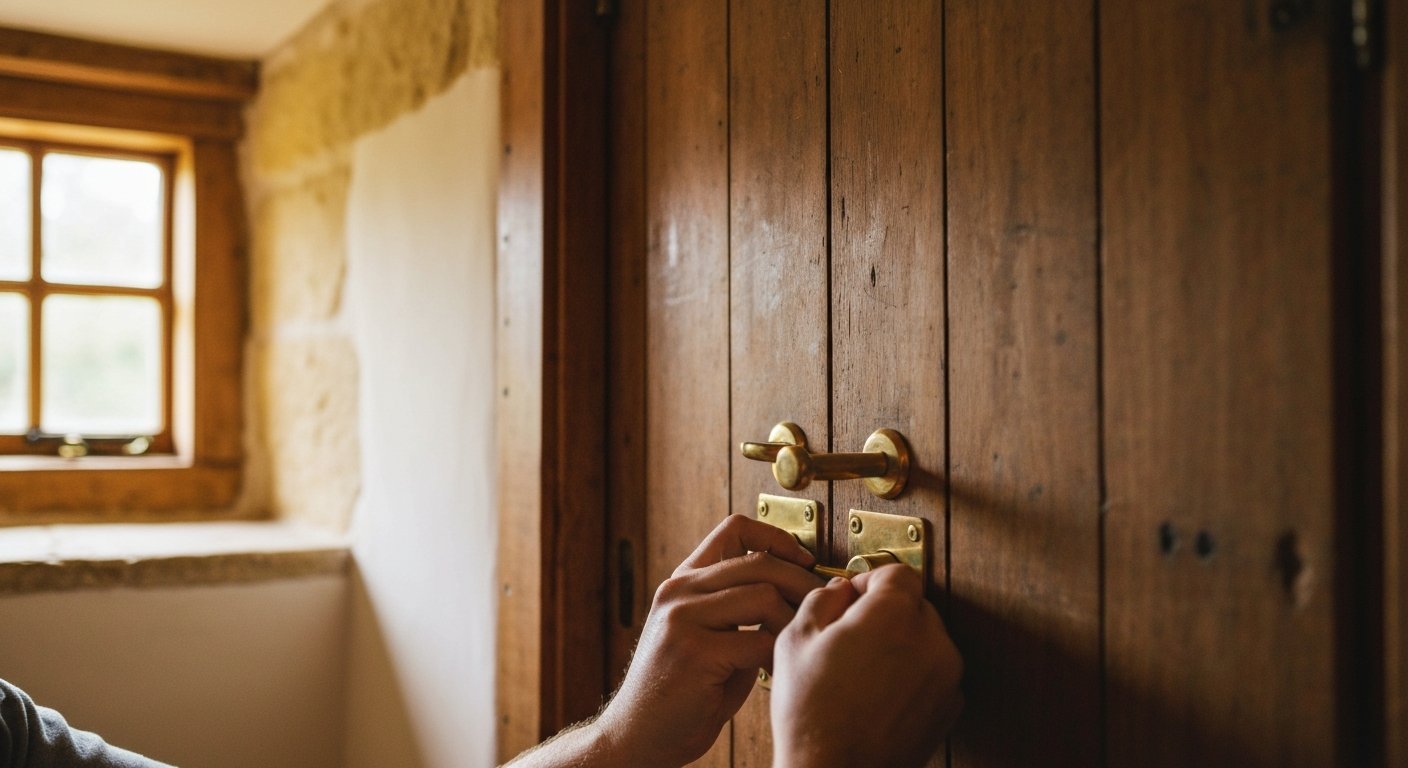
Open the door. Check the hinge screws. Over time they loosen, the door drops, and suddenly the bottom catches. Tightening the hinges often cures a sticking door without any cutting at all. Two minutes.
If the screws spin in place, the hole's gone. Matchsticks with wood glue is the classic fix. Pack the hole, snap off level, let dry overnight, re-drill the pilot, refit. Good as new.
Check the strike plate
The metal plate on the frame where the latch catches. If the latch is hitting the edge of the plate, the plate is usually slightly in the wrong place. Loosen its screws, move it 1 or 2mm in the right direction, refit. Latch clicks home, door stays shut.
Lubricate and wait
If the door's only just started sticking and the weather's been unusually humid, sometimes a quick rub of candlewax or bar soap on the sticking point, plus a wait for a dry week, solves it. Come October the door goes back to normal.
Proper shave with a plane
If all else fails, take the door off its hinges and plane the sticking edge. Key points:
- Mark exactly where it's touching before you start. A pencil along the problem area after one closing attempt shows you precisely where to work.
- Plane the hinge edge if you can, not the latch edge. Latch edge has the bevel, the face, and the latch recess, all of which get fiddly.
- Take wafers off, not slabs. 1mm at a time. Check often.
- Re-treat the raw edge with quick-dry primer and a matching paint so it doesn't absorb moisture and swell straight back up.
- Allow 20 to 30 minutes for the paint to be touch-dry before rehanging.
Only if necessary, adjust the frame
Sometimes the frame itself has shifted. If you've tightened hinges, checked the plate, and planed the door, and it still sticks, the frame has gone out of square. That's a bigger job. Usually involves packing the frame, rescrewing to the wall, sometimes making a patch in the architrave. Not a five-minute repair.
A word on external doors
External doors swell more than internal ones because they meet the weather directly. If your front door is sticking only in summer, almost certainly the weatherseal has swelled, not the door itself. Look at the seal. If it's compressed, frayed or has come unstuck, a new weatherseal is usually all you need: about £15 for the seal and an hour's work (£55).
Costs
- Tighten hinges, check strike plate, lubricate: 20 minutes, often rolled into another visit.
- Take off, plane, prime, rehang: 45 to 90 minutes, so £55 to £72.50.
- Frame adjustment: half a day. Case by case.
The one thing I'll always say: don't plane a door in panic. A sticking door in June is often fine again by September. If you can live with it for a week, and check the hinge screws first, you might not need to touch the timber at all.
Door driving you mad?
Take it off, sort it out, rehang it, done in an hour. Usually no need to strip the whole frame.
Doors, locks and windows